
Last Updated on November 23, 2026 at 11:40 a.m.
Earlier this month, Susan Collins (R-ME), chair of the Senate Appropriations Committee, released draft spending bills for health, education, and nutrition that would affect a range of prenatal-to-three priorities, from the Special Supplemental Nutrition Program for Women, Infants, and Children (WIC and maternal health programs to child care and early learning initiatives. Unlike most spending bills, the proposals were released without a committee markup or bipartisan agreement, leaving considerable uncertainty about their future.
With federal funding currently set to expire on December 11, lawmakers must negotiate full-year appropriations bills or enact a continuing resolution that temporarily extends current funding levels to avoid a government shutdown. The Senate Appropriations Committee’s lead Democrat Patty Murray (D-WA), who is expected to chair the Senate Appropriations Committee in the 120th Congress, has expressed support for delaying final funding decisions until early next year, underscoring the uncertain path ahead.
While the proposals have not been considered by the full Appropriations Committee or the Senate, they provide the clearest indication to date of how Senate Republicans would approach funding for several key prenatal-to-three priorities. The tables below summarize Senate funding proposals for selected nutrition, maternal and child health, early care and learning, and public health programs, with additional information about each program provided alongside the relevant funding table.
Nutrition
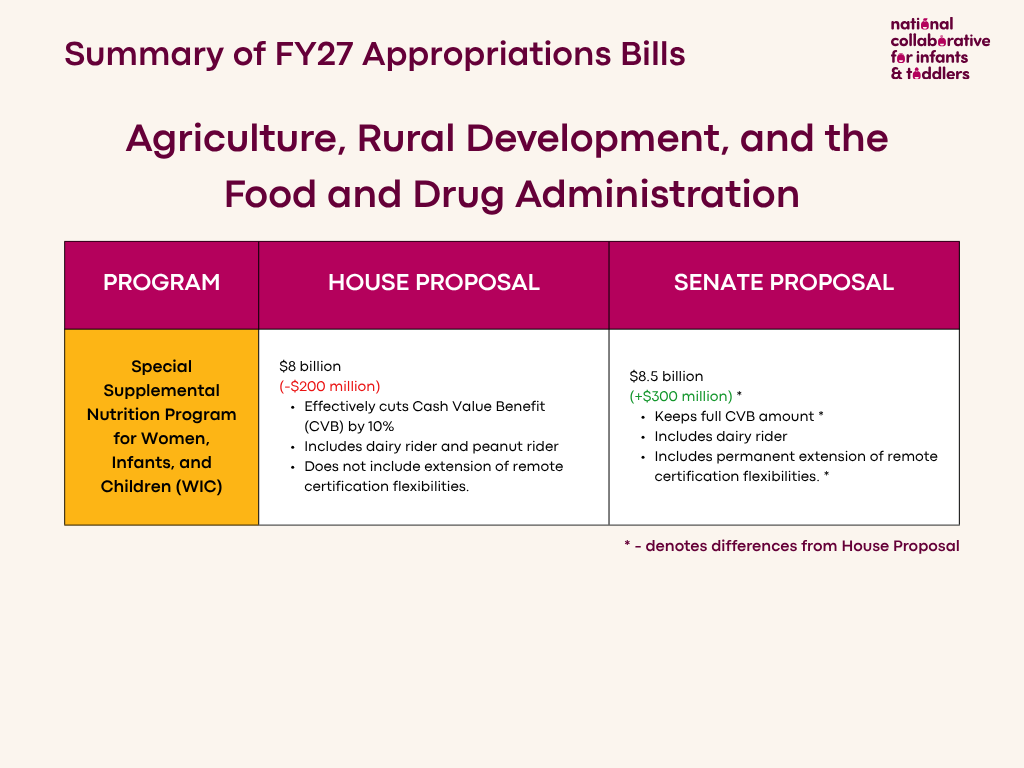
- Special Supplemental Nutrition Program for Women, Infants, and Children (WIC): WIC provides nutritious foods, breastfeeding support, nutrition education, and health referrals to pregnant and postpartum individuals, infants, and young children. Its food packages are based on nutrition science and tailored to participants’ stage of life, including a fruit and vegetable benefit known as the Cash-Value Benefit (CVB). Appropriations bills can include policy riders amending the food package, which are provisions attached to funding bills that can affect how WIC is administered, including changes to the science-based food packages and related benefits.
Maternal & Child
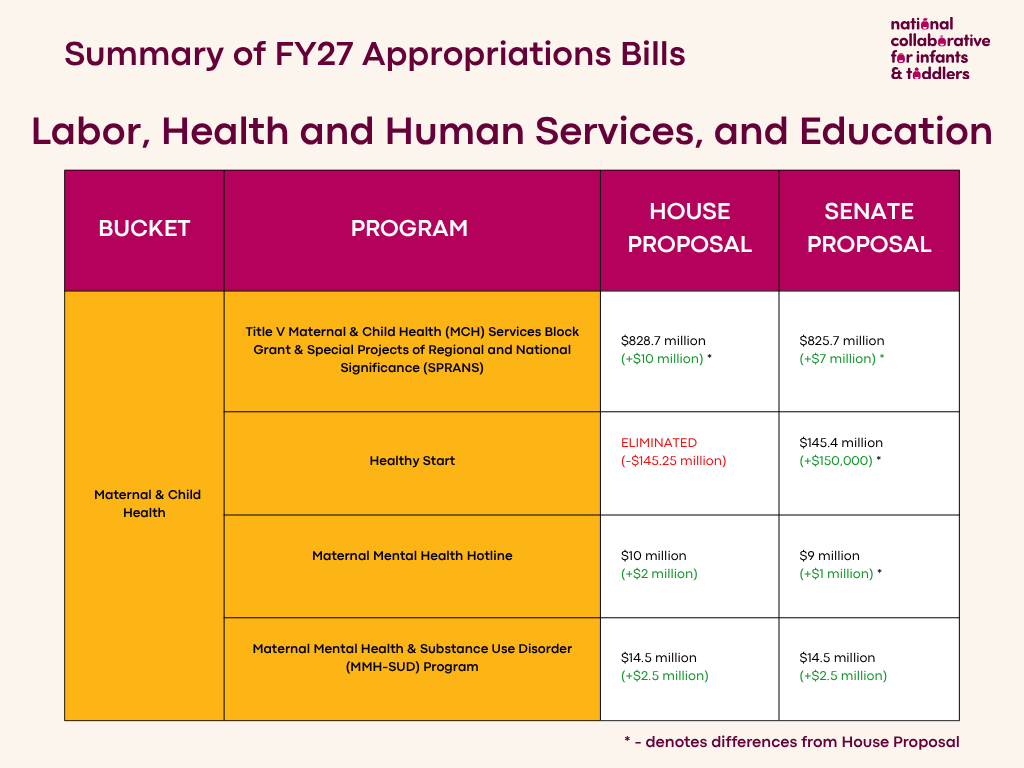
- Title V Maternal and Child Health (MCH) Services Block Grant & Special Projects of Regional and National Significance (SPRANS): The Title V MCH block grant helps states improve maternal and infant health, reduce infant mortality, and support children with special health care needs. SPRANS complements the block grant by funding initiatives such as maternal health innovation grants, newborn screening programs, and workforce development efforts.
- Healthy Start: Healthy Start is a community-based program that helps improve health outcomes before, during, and after pregnancy in communities facing elevated rates of infant mortality and other maternal health challenges. Participants are connected with care coordination, education, screenings, and support services tailored to local needs.
- National Maternal Mental Health Hotline: The National Maternal Mental Health Hotline provides free, confidential mental health support for pregnant and postpartum individuals 24 hours a day, seven days a week. Counselors offer emotional support, information, referrals, and connections to local resources.
- Maternal Mental Health and Substance Use Disorder Program (MMH-SUD): The MMH-SUD Program helps health care providers identify, treat, and refer pregnant and postpartum patients with mental health or substance use disorders. The program currently operates in 12 states plus Los Angeles County through provider consultation, training, and care coordination networks.
Early Care and Learning
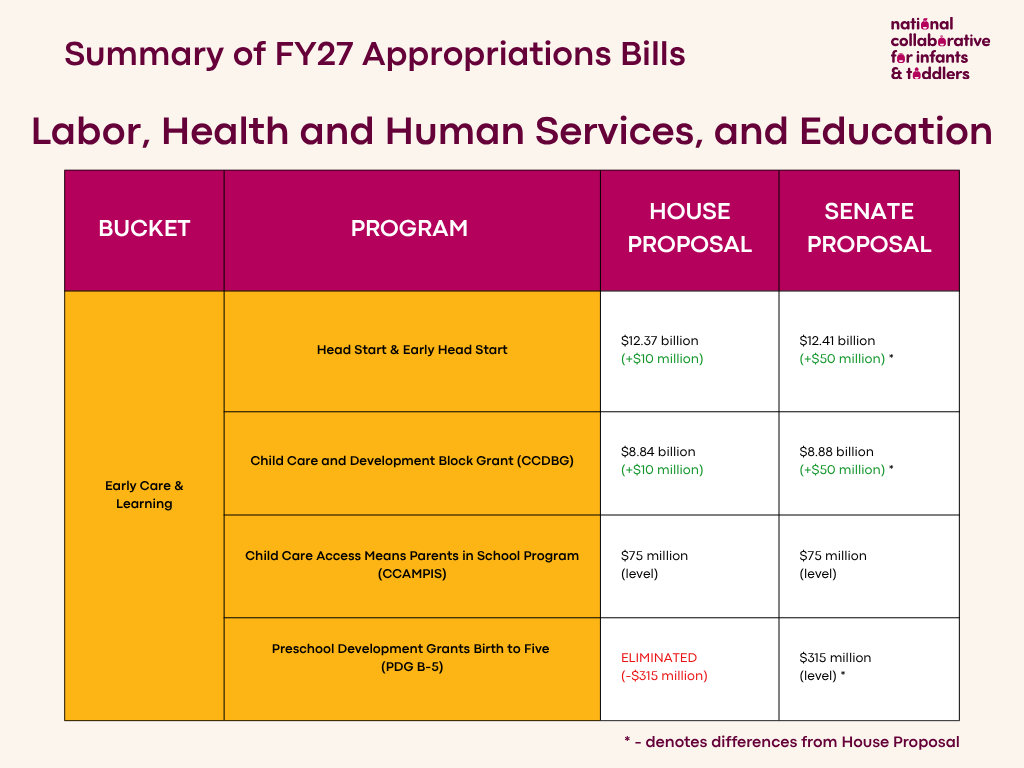
- Head Start & Early Head Start (HS/EHS): Head Start and Early Head Start provide comprehensive early learning, health, nutrition, and family support services for children from low-income families. Early Head Start serves pregnant individuals, infants, and toddlers, while Head Start primarily serves preschool-aged children. Notably, the bill does not include language to delay implementation of the Administration’s proposed rule on “Reducing Federal Burden for Head Start Programs.”
- Child Care and Development Block Grant (CCDBG): The Child Care and Development Block Grant is the primary federal funding stream that helps low-income families afford child care. States also use CCDBG funds to improve the quality, safety, and supply of child care services.
- Child Care Access Means Parents in School Program (CCAMPIS): The Child Care Access Means Parents in School Program helps low-income student parents stay enrolled in college by supporting campus-based child care programs and related services. Grants are awarded directly to colleges and universities.
- Preschool Development Grants Birth-to-Five (PDG B-5): Preschool Development Grants Birth-to-Five help states strengthen and coordinate their early childhood systems. The program focuses on improving access, reducing fragmentation, and helping families navigate services more easily.
Centers for Disease Control & Prevention
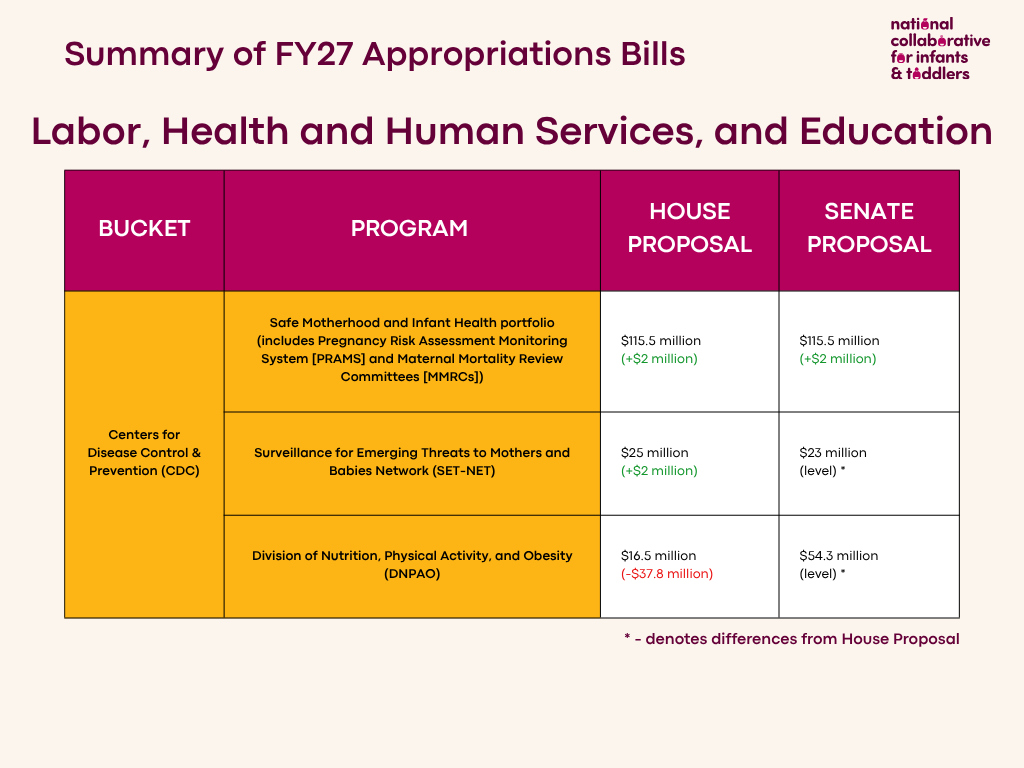
- Safe Motherhood and Infant Health Portfolio: CDC’s Safe Motherhood and Infant Health portfolio supports efforts to improve maternal and infant health through surveillance, research, and prevention activities. It includes the Pregnancy Risk Assessment Monitoring System (PRAMS) and Maternal Mortality Review Committees, which help identify factors contributing to pregnancy-related deaths and poor birth outcomes.
- Surveillance for Emerging Threats to Mothers and Babies Network (SET-NET): SET-NET tracks how emerging health threats affect pregnant people and infants. The network has been used to monitor the effects of threats such as Zika, COVID-19, hepatitis C, and syphilis during pregnancy.
- Division of Nutrition, Physical Activity, and Obesity (DNPAO): DNPAO supports public health efforts to improve nutrition and reduce chronic disease. Within the prenatal-to-three space, its work includes promoting breastfeeding-friendly hospital practices and workplace supports for nursing mothers.
Branden Reis is an Associate Government Relations Manager for Voices for Healthy Kids and the Federal Advocacy team at the American Heart Association, where he advances prenatal-to-three policy priorities and represents the National Collaborative for Infants & Toddlers at key federal advocacy tables. He holds degrees in Political Science, Economics and Public Administration, and brings expertise in advocacy, coalition-building and public policy analysis to his work supporting children and families nationwide.
